Yield Farming: The 2026 Beginner’s Guide to Earning Crypto Rewards
If you’ve ever wondered how to make your crypto work for you without selling it, you’re asking the right question. Yield farming has matured considerably into 2026. It’s now more accessible, lower-fee, and more practical than ever – especially on Layer-2 chains where gas costs are a fraction of what they were in earlier years.
This 2026 yield farming for beginners guide explains what yield farming is, how it works today, and why a growing number of everyday users are earning 2-13% APY on stablecoins through protocols they fully control.
What Is Yield Farming?
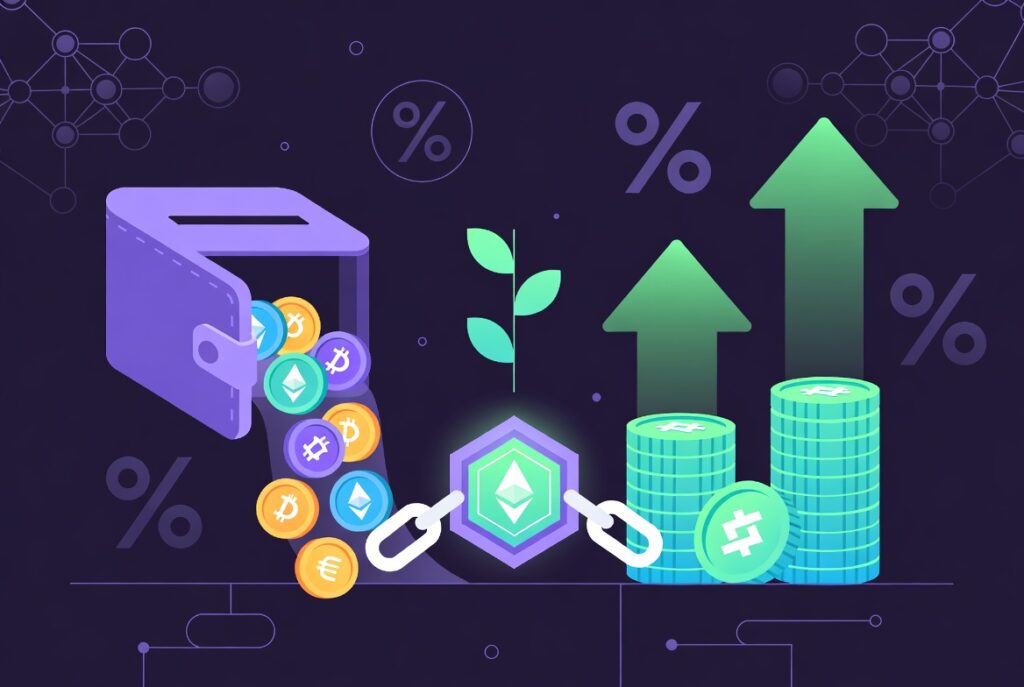
Yield farming = Putting your cryptocurrency to work in decentralised protocols so it earns rewards – similar in concept to a high-yield savings account, but operating on the blockchain.
Here’s the comparison:
| Traditional Savings (2026) | Yield Farming (2026) | |
|---|---|---|
| APY | 0.5-4.5% (banks) | 2-13% (realistic on audited platforms) |
| Structure | Centralised & regulated | Decentralised & permissionless |
| Protection | FDIC up to $250K (US) | Smart-contract security + optional on-chain insurance |
Real example as of March 2026: Aave on Base is currently offering a base APY on USDC in the range of 2-3% (note: lending rates are variable and change based on pool utilisation – always check the live rate). Morpho and established auto-compounders like Yearn Finance and Beefy Finance are delivering 4-7% or higher on optimised stablecoin vaults, depending on market conditions. Yield Basis (YB), a DeFi protocol built on Curve Finance, also supports btc yield farming so that Bitcoin holders earn yields.
How Yield Farming Actually Works (The 3-Step Loop)
- You deposit crypto – usually stablecoins like USDC or USDT – into a protocol.
- Borrowers use your funds and pay interest.
- You earn the interest and, in many cases, additional governance or incentive tokens.
You effectively become the lender in a peer-to-peer system governed by audited smart contracts rather than a central institution. Your deposited assets remain in the protocol’s smart contracts; you retain custody through a connected wallet and can withdraw at any time (subject to available liquidity).
The 2026 Landscape: What’s New and Better
Yield farming in 2026 is considerably more measured than its earlier iterations:
- Ultra-low fees: Base, Arbitrum, and other L2 networks keep transactions well under $0.10 and often under $0.05.
- Auto-compounding vaults: Protocols like Yearn Finance and Beefy Finance automatically reinvest rewards, improving effective returns over time.
- Risk stratification tools: Platforms now offer tiered vault structures allowing users to select risk exposure more deliberately.
- Stablecoin-first adoption: The majority of newer DeFi participants begin with USDC or USDT deposits to avoid price volatility risk – a trend reflected broadly across DeFi analytics platforms.
- Improving regulatory frameworks: Jurisdictions including the EU (via MiCA) and parts of Asia have introduced clearer DeFi-adjacent regulation. Significant uncertainty remains in other markets, including the US, and users should verify the legal status of DeFi activity in their jurisdiction.
Types of Yield Farming (Pick Your Risk Level in 2026)
| Type | Example Platforms | Realistic APY (March 2026) | Risk Level | Best For |
|---|---|---|---|---|
| Low Risk | Aave, Compound, Morpho | 2–7% (stablecoins) | Very Low | Beginners & safety-first |
| Medium Risk | Curve Finance, Uniswap V3 | 5–12% | Medium | Intermediate users |
| Higher Risk | Yearn Finance, Beefy, Pendle | 8–20%+ (variable) | Medium-High | Experienced farmers |
2026 recommendation: Start with low-risk stablecoin lending on Aave or Morpho via Base. These are among the most battle-tested protocols in DeFi, with years of audits and substantial liquidity.
Note on Curve Finance: Curve is a well-established protocol and a key piece of DeFi infrastructure, but it suffered a significant exploit in 2023 due to a vulnerability in certain pool contracts. It has since recovered and undergone further audits. Beginners should familiarise themselves with its history before depositing.
Is Yield Farming Safe in 2026?
Safer than its early years, but not without risk.
| Risk | 2026 Reality | How to Minimise |
|---|---|---|
| Smart contract bugs | Rare on long-established protocols | Stick to platforms with strong audit histories and DeFiSafety scores above 90% |
| Rug pulls/exit scams | Negligible on blue-chip platforms; still present on newer or unaudited ones | Avoid anything promising exceptionally high APY (e.g., 50%+ on stablecoins) from unknown teams |
| Stablecoin volatility | Low, though not zero (de-peg risk exists) | Use well-capitalised stablecoins like USDC or USDT; diversify if deploying larger sums |
| Phishing/wallet compromise | Consistently the leading cause of user losses | Use a hardware wallet (e.g., Ledger or Trezor) for holdings above $1,000 |
Practical starting point: Many first-time yield farmers begin with $50-$200 to learn the mechanics before committing more significant capital. This is a sound approach.
Yield Farming vs Staking vs CeFi Lending
| Feature | Yield Farming | Staking | CeFi Lending |
|---|---|---|---|
| Earn extra tokens? | Yes (incentives common) | Sometimes | No |
| Risk level | Low–Medium | Low | Platform/counterparty risk |
| Custody | Full (you hold keys) | Full (for self-custodied staking) | Custodial |
| Best 2026 example | Aave/Morpho stablecoins | Lido (ETH liquid staking) | Varies by provider* |
*CeFi lending platforms (where a centralised company holds your funds, for example Binance) carry counterparty and regulatory risk distinct from DeFi. Several major CeFi lenders have faced insolvency or regulatory action in recent years. Research any CeFi provider’s regulatory status, jurisdiction, and insurance arrangements carefully before depositing.
Getting Started in 2026: Your First Steps (Under 20 Minutes)
- Wallet: Set up Coinbase Wallet or MetaMask (free).
- Buy stablecoins: Purchase USDC on a reputable exchange (e.g., Coinbase) and send to the Base network.
- Deposit: Go to app.aave.com → select Base → Supply USDC.
- Monitor: Check weekly; use on-chain analytics tools to track your position.
- Level up: Once comfortable, explore auto-compounding vaults on Yearn Finance or Beefy Finance for improved effective yields.
Common Questions (2026 Edition)
Q: Can I lose money?
A: Yes. The primary risks for stablecoin depositors on established platforms are smart-contract exploits (historically rare on Aave and Compound) and stablecoin de-pegging. Chasing very high APYs on unaudited protocols substantially increases risk.
Q: What’s the best chain for beginners in 2026?
A: Base (Coinbase’s L2) is a practical starting point. Fees are low, liquidity is deep, and major protocols like Aave are fully deployed there.
Q: Are rewards taxable?
A: In most jurisdictions, yes. In the US, yield farming rewards are generally treated as ordinary income when received. Track all activity with a crypto tax tool such as Koinly or CoinTracker and consult a tax professional for your specific situation.
Q: Is it still worth it in 2026?
A: For those comfortable with the mechanics, 2–13% on idle stablecoins remains meaningfully above most traditional savings rates and is fully non-custodial. Yields are lower than the 2021–2022 peak but more sustainable.
Final Thoughts
Yield farming in 2026 is not about chasing extraordinary returns. For most participants, it is about generating consistent, realistic yields on stablecoins they would otherwise leave idle – with full control over their funds.
Start small. Understand what you’re depositing into. Let compounding do the work over time.
Disclaimer:This article is for educational purposes only and does not constitute financial or investment advice. Always conduct your own research (DYOR) and consult a qualified financial adviser if needed. Never deposit more than you can afford to lose. Protocol APYs refe

 DefinedFi